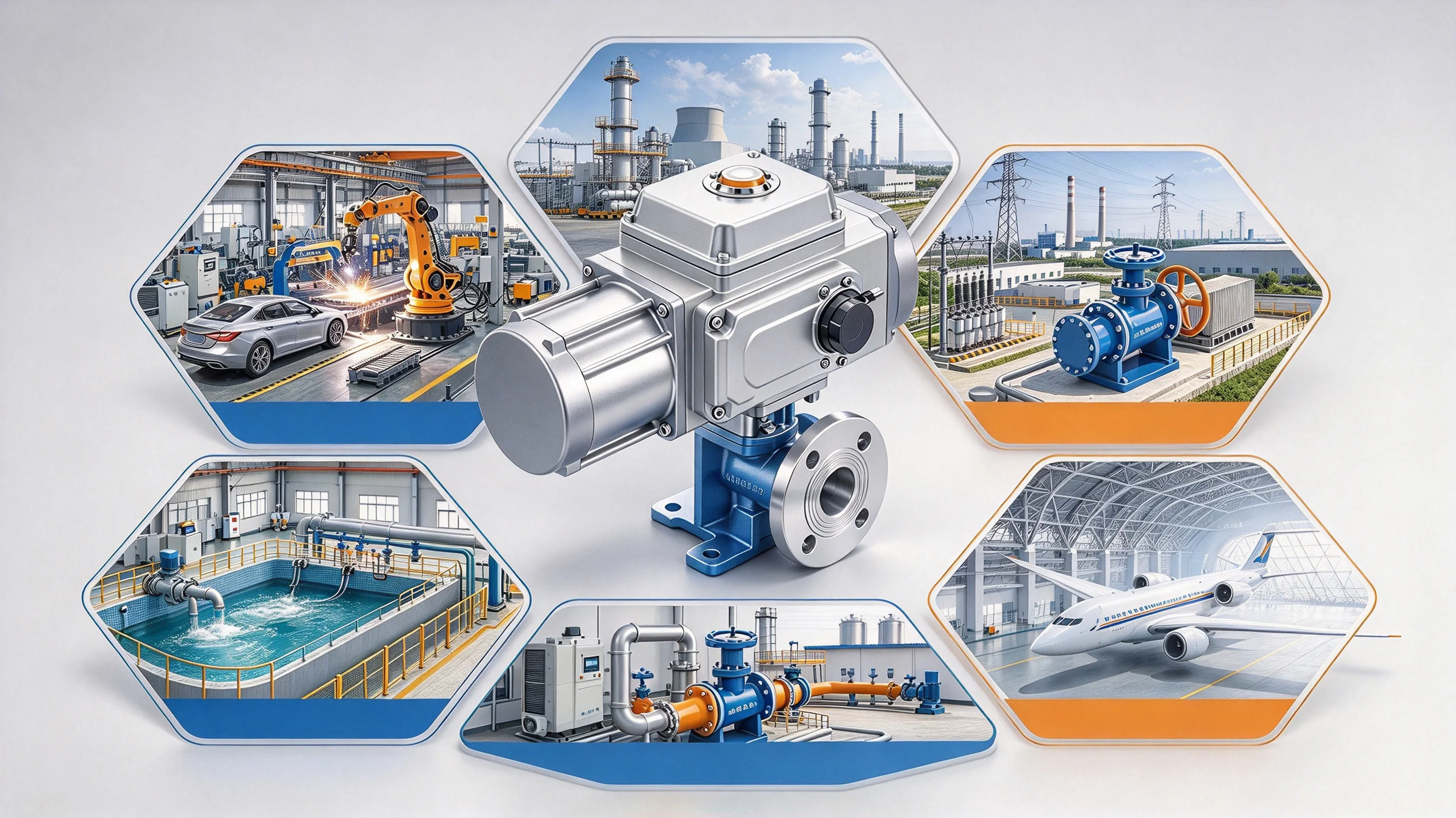
Smart manufacturing and the energy transition are increasing interest in electric actuation across manufacturing, energy, buildings, water treatment and aerospace. These applications contribute to industrial automation and digital control.
The following industries illustrate areas of demand for electric actuation:
Manufacturing: automation associated with smart manufacturing and Industry 4.0 uses electric actuation for valve control and material-handling equipment. Position and motion control can support production efficiency and quality. Automotive assembly and welding-robot motion are examples of electric-actuation applications in the wider industry.
Energy: new-energy development and modernization of oil, chemical and power facilities create requirements for automated pipeline-valve control and remote equipment monitoring to support production safety and efficiency.
Buildings: building automation uses electric actuation for fluid switching, HVAC valve regulation and ventilation control, supporting energy management and occupant comfort.
Water treatment and environmental protection: electric actuation supports sewage-pipeline valves, aeration and sludge-treatment equipment. Industrial wastewater processes also require control of chemical dosing and filtration equipment. Environmental requirements encourage continued improvement in treatment capacity and efficiency.
Aerospace and defence: the wider electric-actuation industry serves applications requiring high precision and reliability, including flight control, fuel regulation and attitude control. These general industry examples do not establish the qualification or supply scope of any particular valve-actuator model.